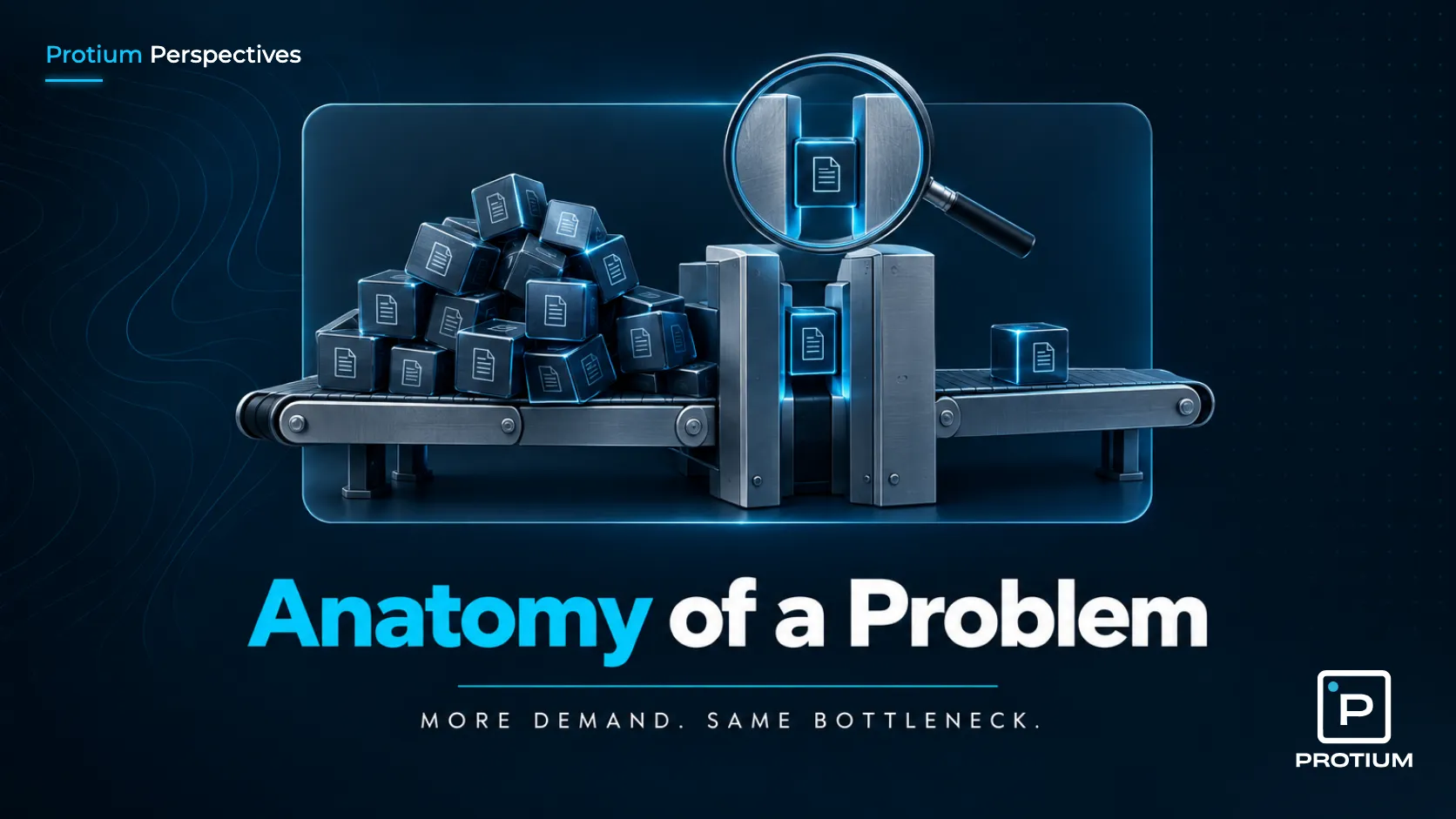
Anatomy of a Problem: The solution that worked perfectly. Until you scaled it.
Why successful software systems can become their own biggest obstacle to growth, and how the right architectural thinking changes the outcome. The sys...

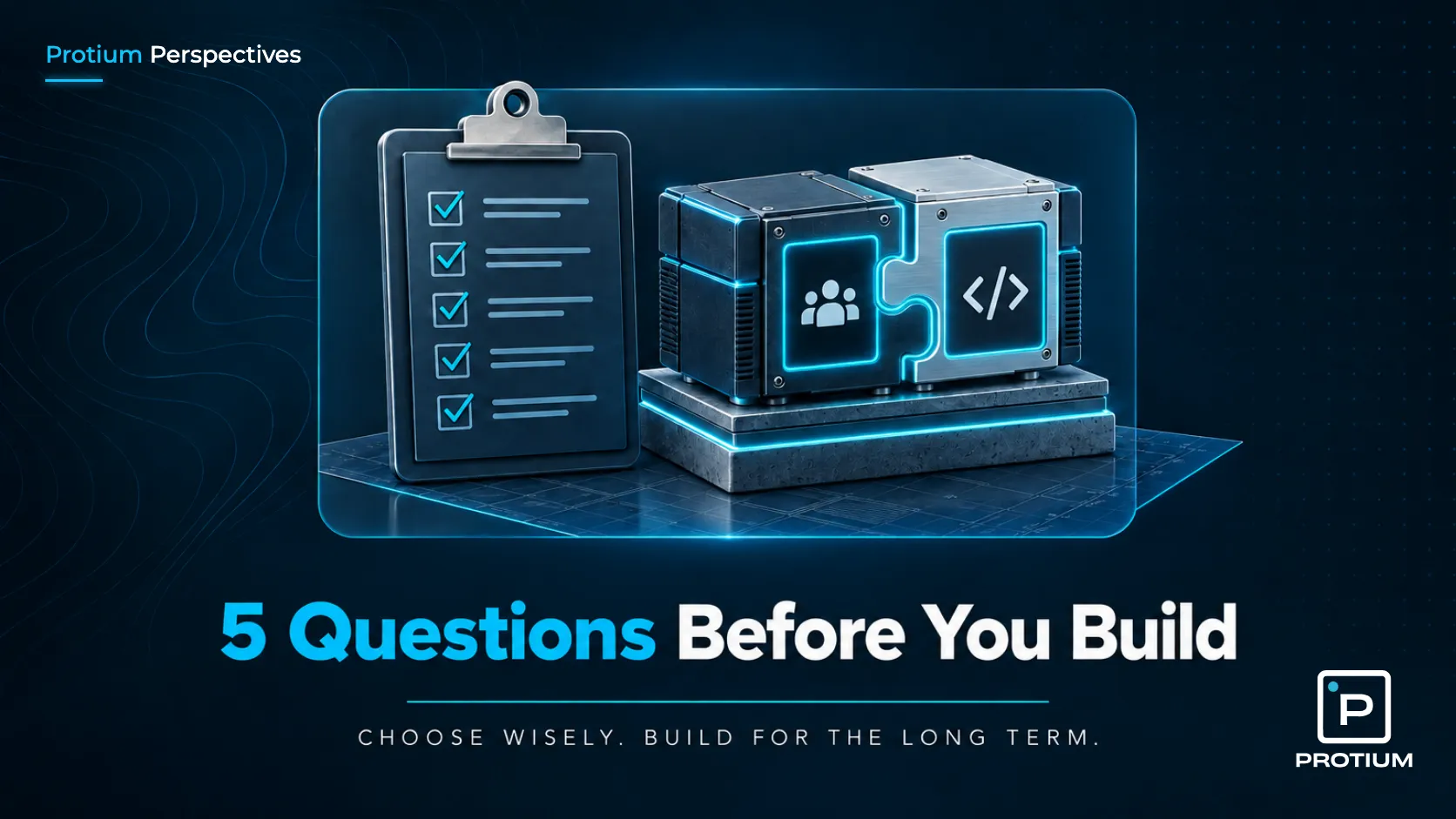
Whether you’re a Seed-stage startup, preparing for Series A, or an established enterprise, the development partner you choose today can shape your business for years to come.
Choosing a software development partner is one of the most important technology decisions a business can make.
And yet, too often, the decision comes down to three things:
How quickly can you build it? How much will it cost? And when can we launch?
These are important questions. But they don’t tell you whether the software will be secure, maintainable, scalable or capable of supporting your business as it evolves.
A development team can deliver a working product without necessarily delivering the right technical foundations.
At Protium, we believe the most valuable conversations happen before the first line of code is written.
Here are five questions every business should ask before appointing a software development partner.
A good development partner should do more than take a brief and start building.
They should understand the business problem behind the requirement.
If you’re a Seed-stage startup: Does your partner understand what you’re trying to validate? Can they help you prioritise the features that matter now without introducing unnecessary complexity or compromising essential foundations?
If you’re preparing for Series A or Series B: Can they assess whether your existing technology can support the next stage of growth? Do they understand how increasing users, transactions and feature demands could affect your architecture?
If you’re an enterprise: Do they understand your operational environment, integration requirements, security expectations, regulatory obligations and existing technology landscape?
The right partner should be comfortable challenging assumptions and recommending a better approach when necessary.
Because building exactly what was requested isn’t always the same as solving the right problem.
This is arguably one of the most important questions you can ask.
Software shouldn’t be designed solely around the next feature request. It needs an architecture that can support changing business requirements without requiring constant rework.
Ask your potential development partner:
For startups, the goal isn’t to build an expensive enterprise-scale platform before the business has validated its model. It’s to make sensible foundational decisions that leave room for growth.
For enterprises, the focus may be on modernising existing systems, reducing operational risk or enabling new capabilities without disrupting business-critical processes.
A strong partner should be able to explain the trade-offs involved. Not every system needs microservices, complex infrastructure or the latest technology.
The best architecture is the one that fits the business.
Software engineering has decades of established design patterns, tools and security practices.
These exist for a reason.
One of the mistakes we regularly see is unnecessary custom development where proven solutions already exist.
This is particularly important when it comes to security.
Authentication, authorisation and cryptographic implementations should rely on established, well-tested approaches rather than experimental custom mechanisms.
Ask your development partner:
A partner should be able to justify their technical choices in terms of reliability, security, maintainability and business requirements.
Innovation doesn’t mean inventing everything from scratch. Sometimes the most valuable engineering decision is knowing which existing solution to use.
A development company may have an impressive portfolio, a large team and a polished sales presentation.
But who will actually be making the architectural decisions that determine the success of your project?
For a funded startup, experienced architectural leadership can help avoid decisions that become expensive obstacles during future growth or technical due diligence.
For an enterprise, it can make the difference between a development partner who simply fulfils requirements and one who contributes meaningfully to the organisation’s technology strategy.
The number of developers assigned to a project matters less than the quality of the decisions guiding their work.
You don’t just need people who can write code. You need people who understand what should be built, how it should be built and why.
A successful launch is a milestone, not the end of the software lifecycle.
Business requirements change. Security threats evolve. New integrations become necessary. Customer expectations increase.
And software needs to adapt.
Before selecting a partner, ask:
For startups, these questions become increasingly important as the business builds its own engineering team or prepares for additional investment.
For enterprises, they are essential for managing operational continuity, vendor dependency and long-term technology costs.
The right development partner should help you build a sustainable technology asset, not create a dependency that makes it difficult to move forward without them.
At Protium, we believe exceptional software engineering starts with asking the right questions.
Our approach is built around understanding the business problem, making deliberate architectural decisions and creating software that is robust, maintainable and capable of evolving.
We believe in using proven engineering practices, avoiding unnecessary complexity and investing in the foundations that matter.
Because the quickest solution isn’t always the most efficient one. And the cheapest development quote doesn’t always translate into the lowest long-term cost.
Whether you’re a funded startup building the foundation for your next stage of growth or an established enterprise navigating complex technology requirements, your development partner should be thinking beyond the immediate deliverable.
They should be thinking about the future of your business.
How We Build: Foundations > Foresight > Future-Proof
Ask yourself one final question:
Are we hiring a team to build what we’ve asked for, or a partner who will help us make the right technical decisions?
That distinction could be one of the most important decisions you make.
#SoftwareDevelopment #SoftwareArchitecture #StartupTechnology #TechnicalDueDiligence #Protium
Why successful software systems can become their own biggest obstacle to growth, and how the right architectural thinking changes the outcome. The sys...
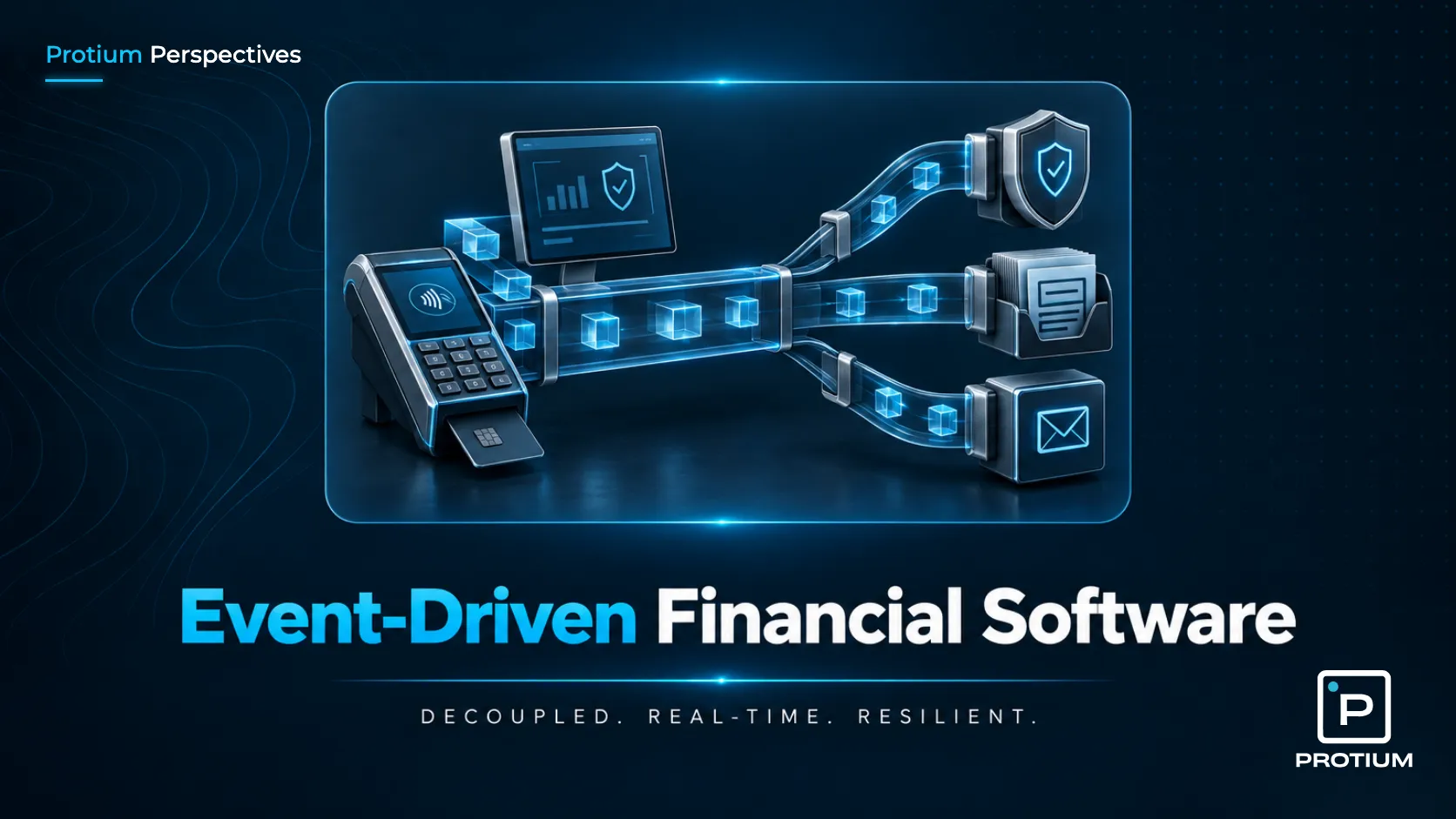
In the dynamic world of financial services, where transactions & user engagements are rapid, complex, and often unpredictable, having a software archi...